
The Long Fall
The myth of a stable past, the inheritance of crisis, and the view we call progress

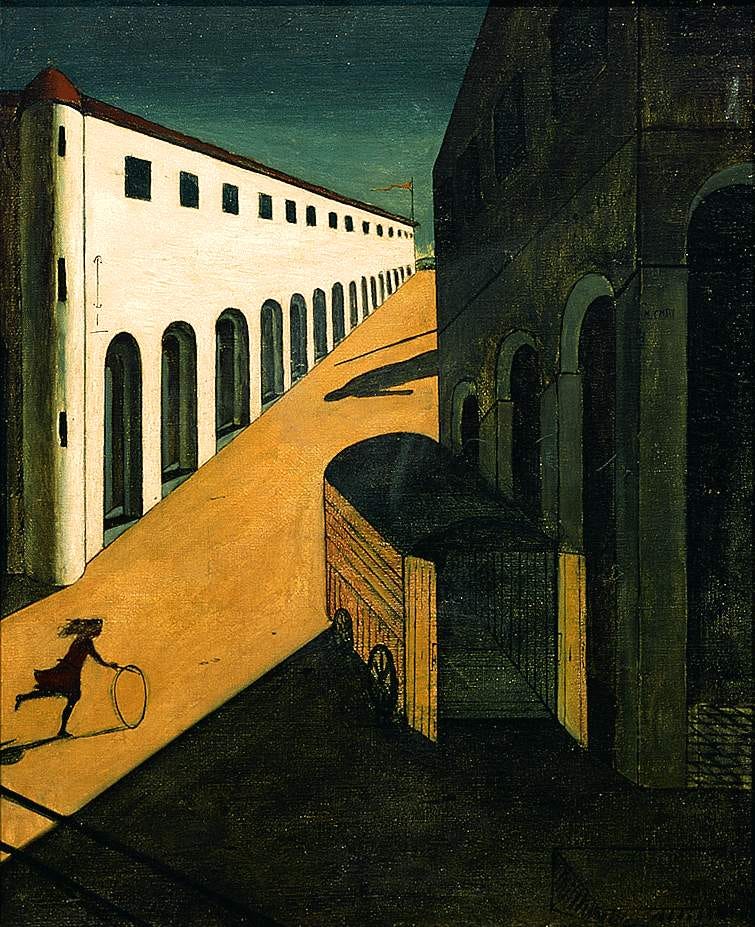
“I don’t remember having lived in a world without crisis. But if I were just a bit older, I would remember.”
—from Interventions 2020 by Michel Houellebecq (b. 1956)
I don’t remember having lived in a world without crisis. But if I were just a bit older, I would remember. That’s the line that keeps snagging—not because it’s clever, but because it’s petulant, like someone realising they arrived just after the party ended and being told, with a shrug, that it was rather good while it lasted.
Crisis. Dear Reader, crisis has been the wallpaper of my adult life. Economic, military, climatic, democratic, epidemiological, existential—pick your prefix; the noun stays loyal. The tone is always urgent, the graphs always alarming, the experts always solemn. Permanently on the brink we are, though the brink itself has grown comfortable. You develop routines. You check the news the way previous generations checked the weather, less to be informed than to confirm that yes, the storm is still coming.
What I don’t have is a memory of calm. Not the private sort—there have been breaks, dinners, holidays, idle afternoons under the sheets—but the public calm, the shared sense that the future is broadly intelligible and not actively hostile. I’ve inherited a civilisation already narrating its own decline. This works something peculiar on the nervous system. When catastrophe is ambient, it stops shocking. It becomes a background hum, like traffic or tinnitus. One plans not around hope, but around mitigation, don’t you find?
Older people—just a bit older—used to speak of a different tempo. This was when I was younger. Older people spoke of a time when politics was boring, when institutions were dull but durable, when tomorrow was assumed rather than feared. I listened with the indulgence reserved for fishermen. Part of me suspected exaggeration. Another part resented them, fiercely. Not because they had had it better—every generation does, in some way—but because they remembered a baseline against which decline could be measured. I had no baseline then, and have no baseline today. Only fluctuation.
To grow up without a world-without-crisis is to develop a strange moral posture. Everything feels provisional. Commitments are hedged. Irony becomes a survival skill. You avoid believing too hard in anything, lest it collapse before the belief has paid for itself. Even optimism is cautious now—market-tested, modest, anxious to manage expectations. We hope the way one hopes a delayed train might arrive, not because we trust the system, but because there’s nowhere else to stand.
There’s also a quiet vanity in it, if I’m honest. Crisis confers importance. It flatters us with relevance. To live at the end of things is to imagine oneself at the centre of history, even if history has become a slideshow of emergencies. The danger is that we grow attached to the drama. That we become, in some unexamined corner of ourselves, disappointed when things stabilise. Peace is dull. Normality lacks content.
“And yet”—again, there it is; you know my habit by now—I find myself longing for a boredom I’ve never known. Longing for a political argument about marginal tax rates. For a news cycle in which nothing irreversible happens, or in which there’s talk of a future that does not require a posture. People speak now of resilience, adaptability, coping mechanisms. These are admirable qualities. They are also what you cultivate when you’ve quietly given up on repair.
If I were just a bit older, I would remember a world that did not constantly ask to be saved. I would know what it felt like to assume continuity. Instead, I inhabit a civilisation that treats every year as a dress rehearsal for collapse, while making long-term plans anyway—retirement accounts, multi-season television series, kitchen renovations. There is something faintly comic about this. We speak of extinction while choosing paint samples.
Perhaps every generation feels this way, convinced it is living through the hinge of history. Perhaps crisis is simply the modern word for time. But I’m not entirely persuaded. Something has shifted. The sense of crisis now precedes events, and it is no longer a response but a stance. We wake up already alarmed, waiting for the justification.
I don’t remember a world without crisis. That is not a complaint, exactly. It’s a diagnosis. And like most diagnoses, it explains a lot without offering a cure. The best I can do, personally, is cultivate moments that feel stubbornly non-apocalyptic. Waiting for a friend who’s being late. A conversation about nothing. A thought that does not immediately scale.
If the crisis is permanent, then so, perhaps, must be the refusal to let it colonise everything. Even the future. Especially the future.
Well.
That is the feeling. That is the diagnosis of a generation that arrived after the party. It makes sense of a certain weariness.
And yet…
What if the party was always a siege? Further, then, what if the premise is flawed? What if Houellebecq—and by extension, the sensibility I just outlined—is wrong? Not emotionally wrong, but historically, catastrophically wrong?
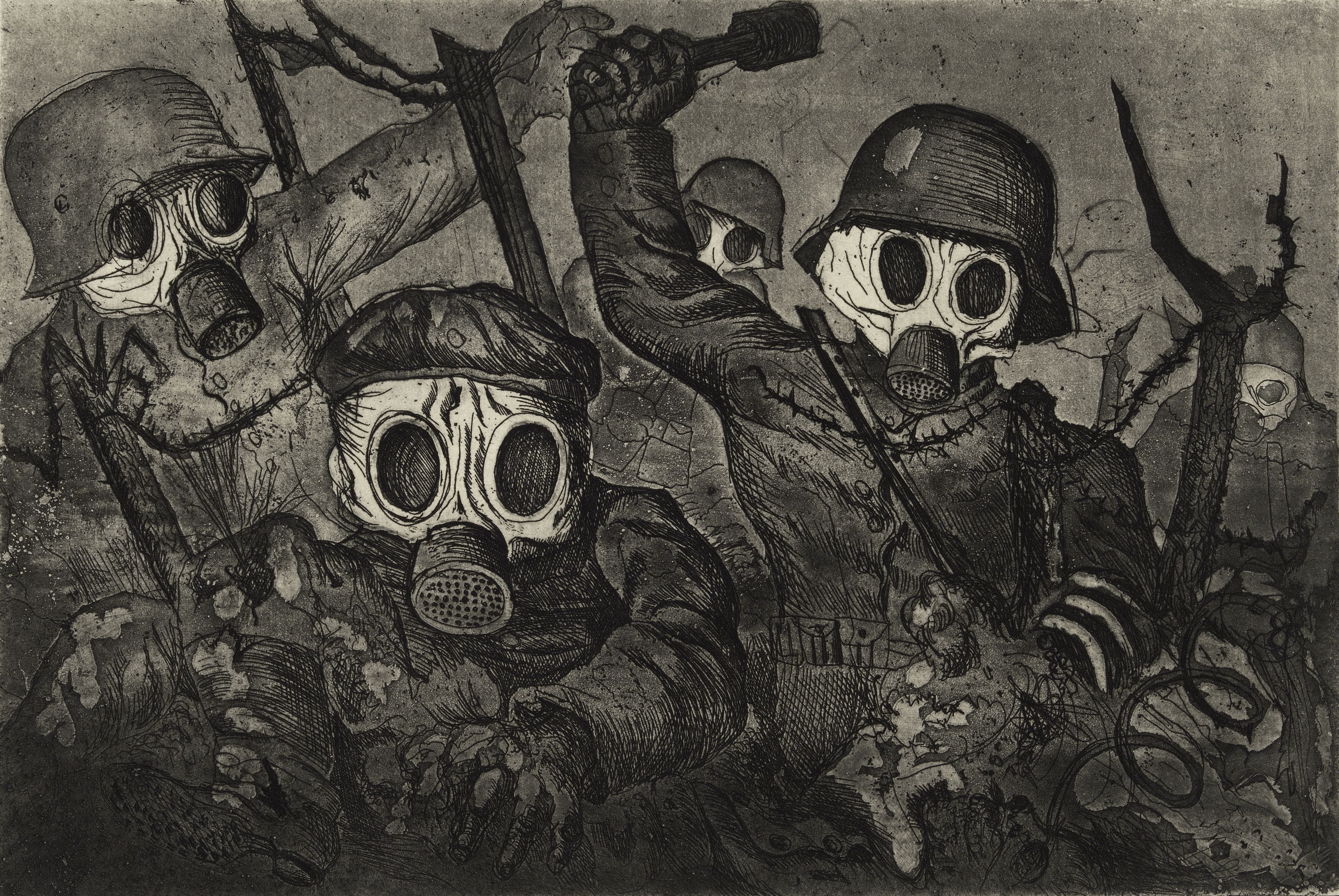
Not wrong in the petty way opinions are wrong on social media, but wrong in the deeper, lazier way cultivated people allow themselves to be wrong when a sentence sounds true enough to pass. The trouble is the conditional—if I were just a bit older. Older than what? Than whom? Older than the century, presumably; older than the televisual now; older than the market’s nervous system. Yet European history, that overfamiliar attic we all pretend not to live in, tells a different story. At least two generations before Houellebecq—three, if we stop flattering ourselves—knew nothing but crisis. They didn’t even need the word.
My grandparents did not experience a “polycrisis.” They experienced borders that behaved like nervous animals—snapping shut, shifting overnight, biting families in half. They experienced partitions announced in distant rooms by men with maps, betrayals signed with fountain pens, currencies evaporating between breakfast and supper. Then they experienced war. Then another war. The idea that there was a remembered, stable world just out of reach, a prelapsarian Europe one could have enjoyed by being born five minutes earlier, is a fantasy manufactured retrospectively—like those sepia photographs of café life that forget the amputees just outside the frame.
Yes, I know—here I go, dragging out the family ghosts. But history is not a parlour trick. History has a way of interrupting complacent generalisations. The Europe of the early twentieth century, hell, the entire Eurasia, come to think of it, was not a calm lake later disturbed by history. It was history, boiling. Empires collapsed. New states arrived badly dressed and poorly parented. Treaties were written with the enthusiasm of revenge and the foresight of a hangover. To say that crisis is a recent condition is to mistake one’s own consciousness for the world’s weather.
But Houellebecq is not naïve. That is what makes the line interesting—and irritating (Reader, if you yourself are not irritated by now then I don’t know what to tell ya). Is he performing a modern reflex: the belief that our anxiety is unprecedented because it is felt so continuously, piped directly into the bloodstream by screens? We mistake saturation for novelty. Our grandparents had fewer updates, but they had more funerals. The crisis did not trend; it simply stayed.
There is also a subtler error at work, one I recognise in myself. We want to believe that there existed a stable world that failed us, because this casts us as victims of decline rather than heirs to disaster. A comforting posture, no doubt. Allows nostalgia without responsibility. But Europe was not betrayed recently; it was forged in betrayal. Partitions are not bugs in the system; they are the system. The twentieth century did not interrupt peace—it briefly interrupted slaughter with administrative paperwork.
And yet—here is the charitable turn, because I am not interested in prosecuting Houellebecq—I think I know what he is reaching for. Not the absence of crisis, but the absence of awareness. A time when one could live locally, ignorantly, even happily, while the tectonic plates shifted elsewhere. That world did exist, unevenly, unjustly. It existed for some and not for others. But that is not the same as a world without crisis. It is merely a world where crisis was someone else’s problem. Those worlds tend not to last.
So no, Mr. Houellebecq: being a bit older would not have rescued you from crisis. It would just have given you better reasons for despair—and fewer illusions about novelty. Crisis is not our condition but our inheritance. What changes is not its presence but its style. Today it comes with push notifications. Yesterday it came with boots on the stairs.
We are not living after the fall. We are living in the long fall, which is how Europe has always lived—pausing occasionally to call the view progress.
—
© 2026 Tomasz Ferdynand Goetel. All Rights Reserved | The Flying Fish
No part of this publication may be reproduced, distributed, or transmitted in any form or by any means—including photocopying, recording, or other electronic or mechanical methods—without the prior written permission of the author, except in the case of brief quotations embodied in critical reviews and certain other noncommercial uses permitted by copyright law.
This material represents the intellectual and creative property of Tomasz Ferdynand Goetel and is protected under United States, the European Union, and international copyright law.
For permissions, licensing, and foreign rights inquiries, contact the Author via Substack DM:
Don’t want to get into the “Paid” substack subscription?
Buy The Flying Fish a coffee so she can type disagreeable things faster.