
The Silence Lease
How Corporate Soundscapes Conquered Our Inner Worlds and Why the Rent Never Stops

⚠️ Disclaimer: This essay is protected personal opinion and social commentary. All analysis of individuals, public figures, corporations, and/or institutions constitutes critique, not factual assertion. This work is not a substitute for professional medical, financial, or legal advice. Views expressed are from a traditionalist and Christian worldview. The author assumes no liability for the interpretation or use of the information contained herein.
Dear Friend, Happy New Year, but let’s not pop the champagne just yet.
The silence has been mugged. In broad daylight. And we all just stood there, scrolling. One day you could drift through the interstitial spaces of life (the lift, the queue, the walk to the bins) in a state of uncurated contemplation. The next, you’re being sonically hosed down by a constant drizzle of inoffensive sound. It’s a form of acoustic vandalism, a shellac of obligatory audio-serenity being poured over every square inch of public life.
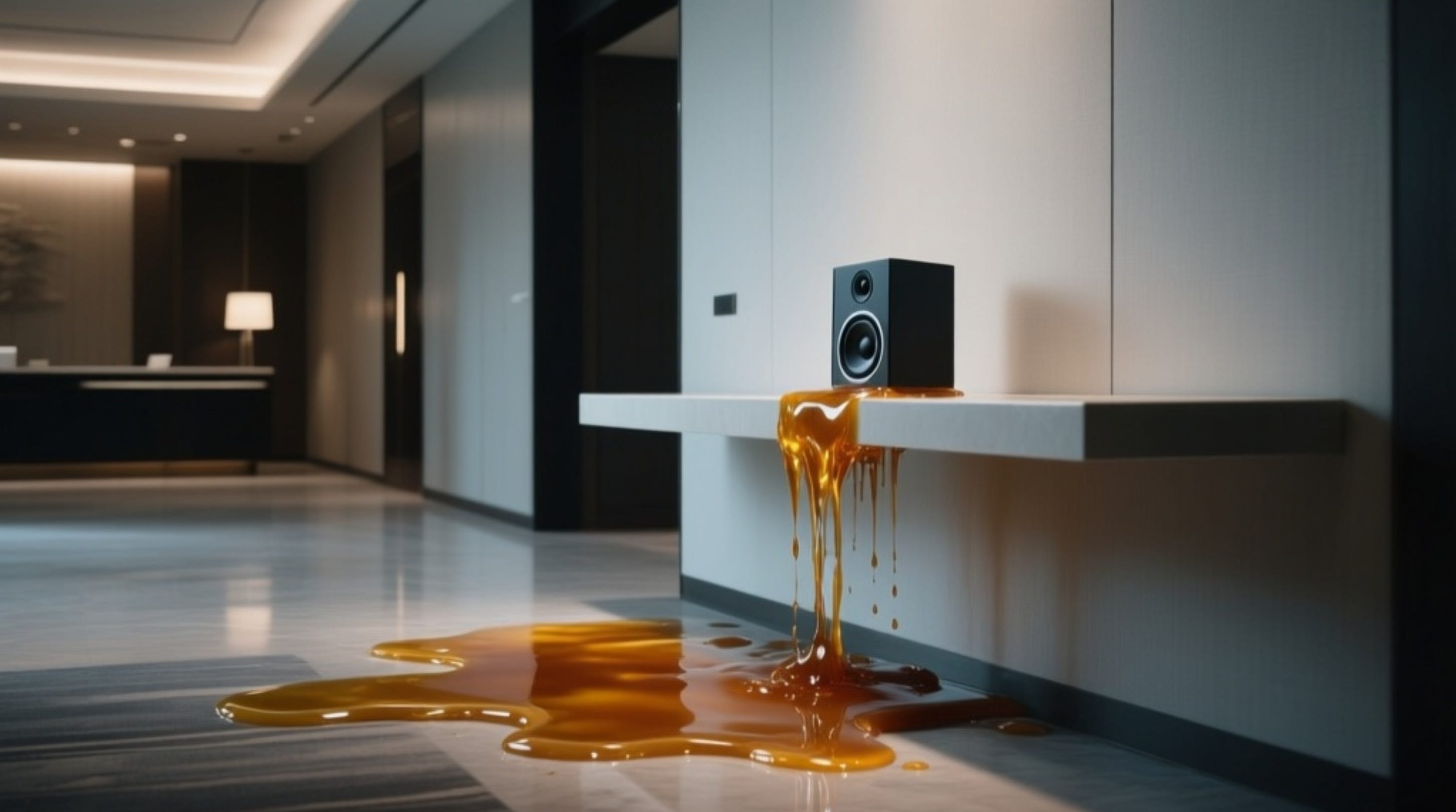
Walk into a hotel lobby. Nothing but a mood board with acoustics. A watered-down Bon Iver track is bleeding from a concealed speaker, telling you how to feel about the overpriced minimalist sofa you’re waiting on. The supermarket aisle? A Taylor Swift remix has been algorithmically selected to soothe you into spending more on artisan hummus. The yoga temple? Don’t get me started, darling. The ancient practice of quieting the mind has been outsourced to a Spotify playlist called “Zen Dreams” that features the panpipes of a man named Kai. He lives in Malmö.
When did ennui become illegal? Sometime around the great convergence of corporate fear and tech solutionism. The modern manager, the urban planner, the wellness guru; they all seem to share a terror of the unoccupied mind. A moment of silence is a commercial opportunity lost. A quiet space is a vacuum that might be filled with a dangerous thought: Why am I here? Is this all there is? Can’t have that. Cue the acoustic wallpaper. A pacifier for the soul, a synthetic barrier against the void.
And the profit? Ah, now you’re talking. Follow the chain. Starts with the ‘experience architects’ and brand managers terrified of a single un-monetized second. They hire the audio-branding firms, those Moodys and Soundsuits of the world, to sonicize the void. The platforms, the Spotifys and their algorithmic curators, provide the infrastructure and the data, fine-tuning the pacification for maximum dwell-time. They all get a slice.
But the deepest profit is shared by a wider consortium: landlords, corporate boards, civic planners. It’s the profit of control. A population that is perpetually sonically soothed is a population that is easier to manage. It doesn’t question. It doesn’t riot. It does, however, shuffle along to the beat, lulled into a state of passive consumption. The music as a gift? Think again. The music is a leash. We’ve traded the sacred, discomfiting territory of our own inner silence for a rental soundtrack. We now live inside the playlist, and the lease never expires.

—
© 2025 Tomasz Ferdynand Goetel. All rights reserved. This work is the intellectual property of the author. Unauthorized reproduction is a failure of strategic imagination.